Diversion at the source

Jaclyn Geddes’ mission is simple but bold: to divert all food waste from landfill.
As the Chief Executive Officer of enrich360, an Australian-owned business focused on circular food systems, she is challenging the traditional “collect and haul” waste model.
For Jaclyn, the solution isn't found at the end of a garbage truck's route, but at the point where the waste is created.
“Behaviour change doesn’t happen just because you hand someone a caddy,” Jaclyn says. “People want to do the right thing, but the system isn’t clear. We need strong top-down structure informed by ground-up knowledge, because food waste shouldn’t be a postcode lottery.
“If we’re serious about diverting food waste at scale, managing it at the source using technology reduces our reliance on heavy infrastructure and unnecessary movement, rather than kicking the can down the road.”
With a background in the fresh food supply chain, Jaclyn entered the waste sector through the lens of food systems, education, and behaviour change.
Her work focuses on decentralised food waste solutions that support practical circular economy outcomes.
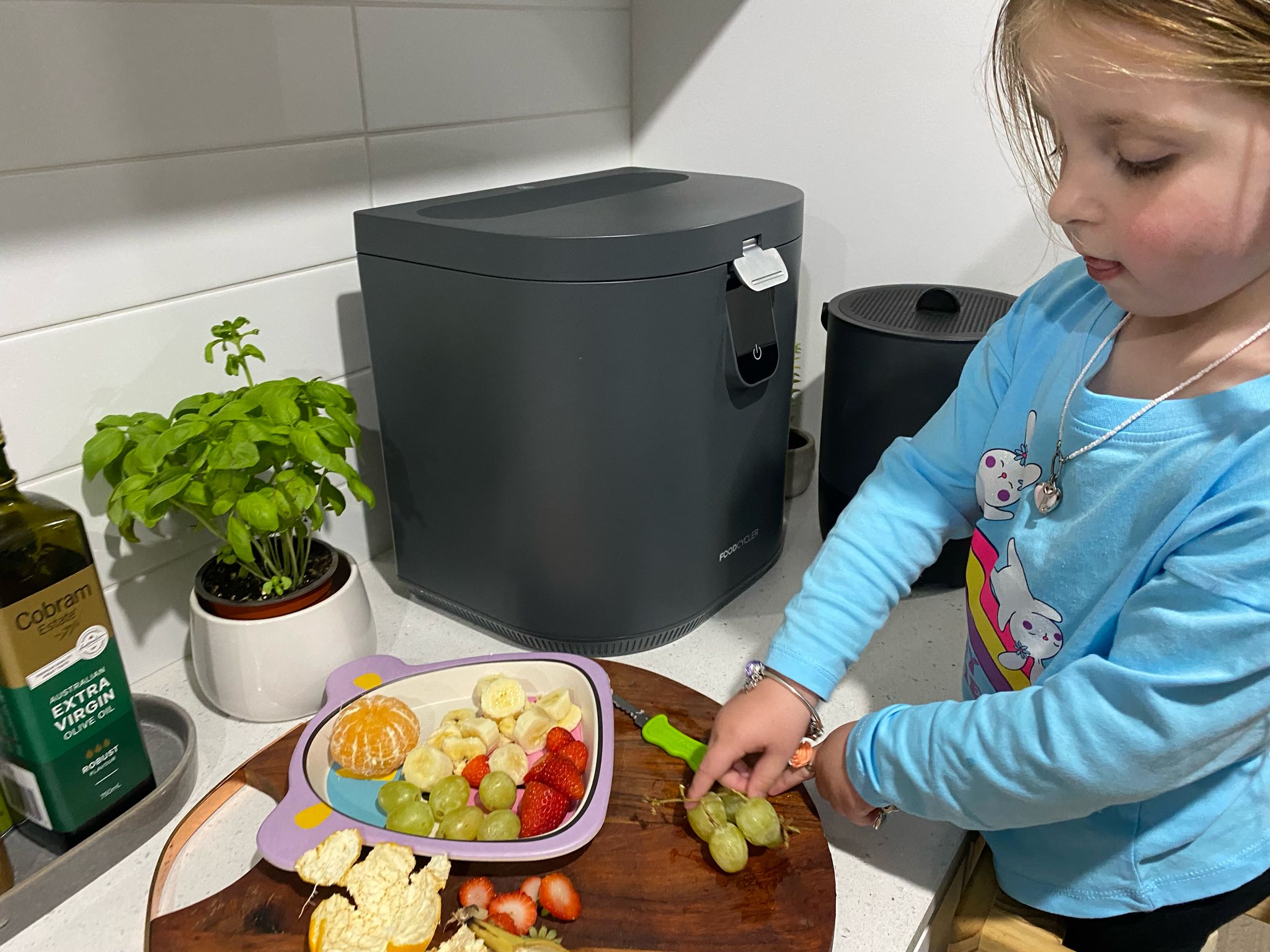
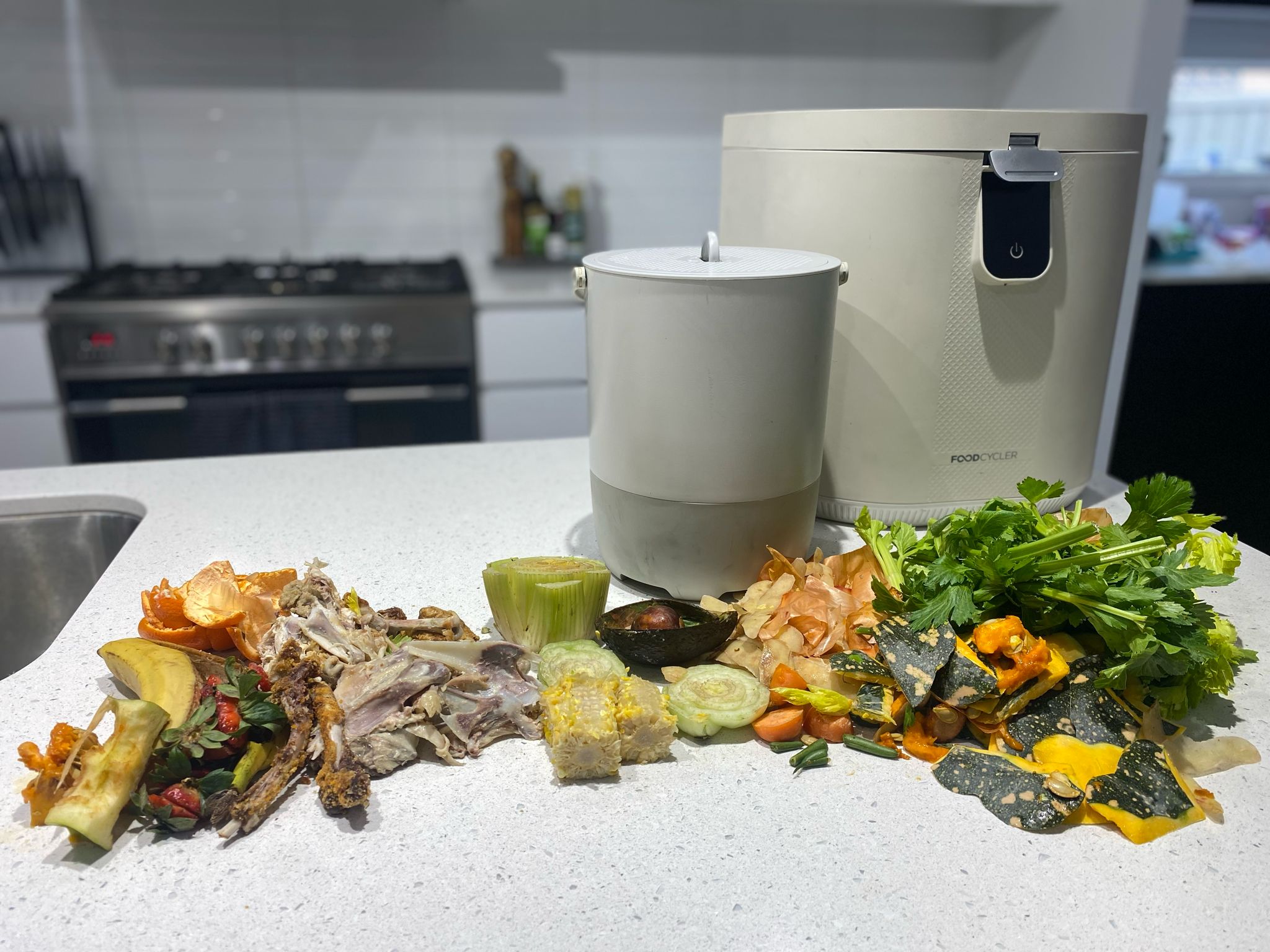
enrich360 provides residential and commercial, food waste dehydration technology that reduces food waste volumes by up to 90 per cent, turning food waste into nutrient-rich soil amendment and potable water.
As demand grows across hospitality, education and institutional settings, Jaclyn says the next phase of decentralised food waste management is about scale and accessibility.
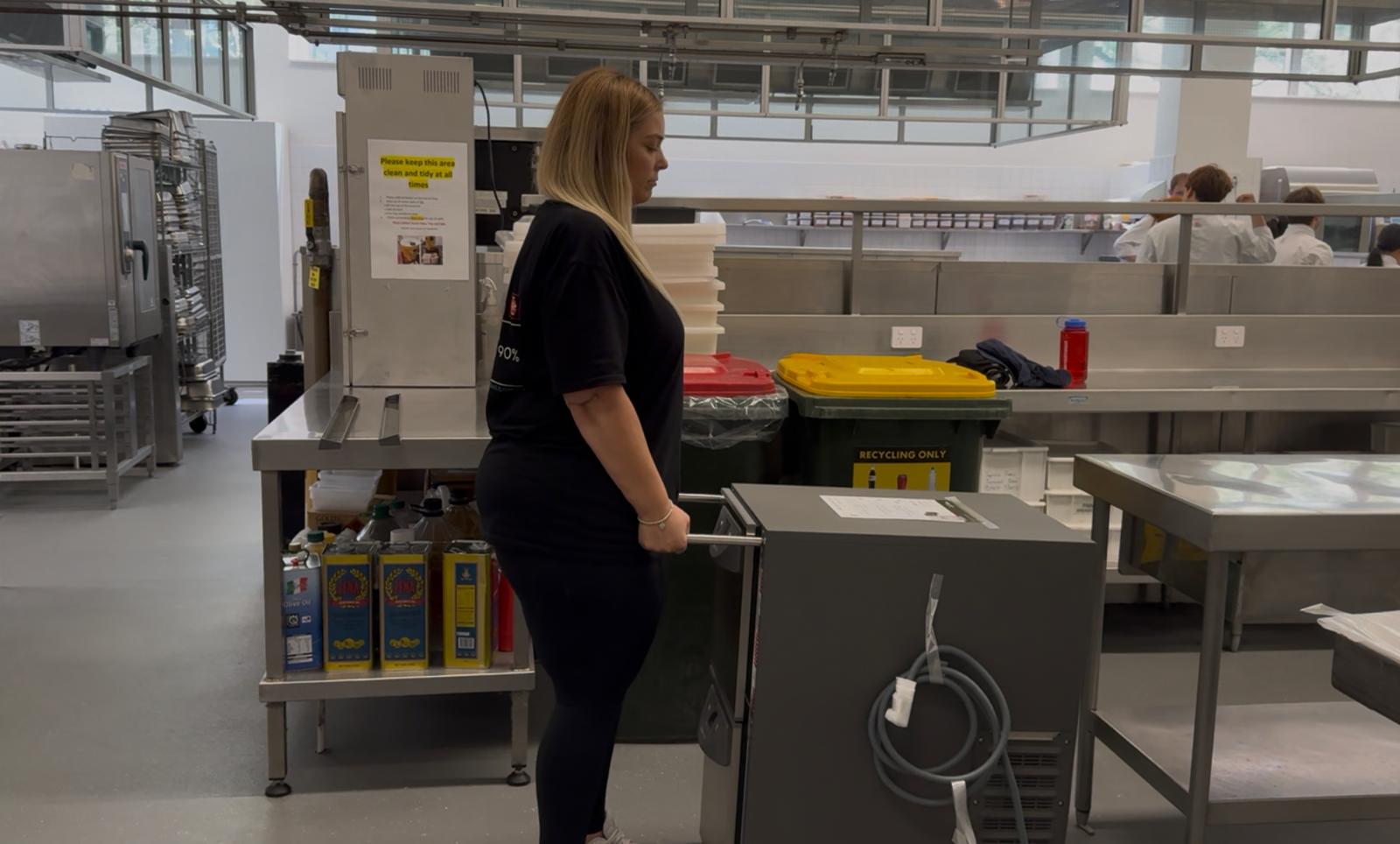
The launch of the Eco 75 in Australia represents a turning point, bridging the gap between small benchtop units and large-scale infrastructure. Capable of processing up to 75 litres of food waste per day, the compact, plug-and-play system allows high food waste generators to manage waste on site without the cost and complexity traditionally associated with industrial solutions.
Integrated directly into kitchen workflows, the technology reduces transport and infrastructure demands while converting food waste within hours
On-ground projects have proven the technology.
To test their benchtop technology in a real-world high-density setting, enrich360 self-funded a 12-week residential pilot at Marina Square in Parramatta, a high-rise apartment development with more than 700 apartments.
The pilot involved 50 participating households who voluntarily used benchtop Eco 5 units to manage their kitchen food waste. Over the 12-week trial period, more than 2000 litres of food waste was diverted from the general waste stream.
Crucially, the loop was closed on-site, as the resulting soil amendment was used by the residents themselves or applied to the development’s gardens and grounds.
Jaclyn says this project proved that even in high-density high-rise living – a setting traditionally difficult for food organics and garden organics (FOGO) collections – circularity is achievable.
On the back of the Parramatta trial, Moonee Valley City Council is leading the first official council-led trial in Australia using benchtop food waste dehydration technology to support apartment residents who do not have access to FOGO or a council-provided food recycling service.
The trial, which began in February, is designed for multi-unit developments where waste services are privately managed and food recycling options are limited. Both renters and owner-occupiers are eligible to participate, with the council offering a 50 per cent co-contribution to provide subsidised access to the Eco 5 dehydrator.
Participants will track usage cycles and complete surveys. The data collected will help the council better understand resident behaviour, diversion outcomes and the role decentralised, at-source solutions can play in reducing landfill reliance in high-density housing.
Jaclyn says it’s an acknowledgment that a one-size-fits-all approach to waste collection is no longer sufficient for evolving urban landscapes.
She also highlights the work happening at Seeds Communal Garden in Brunswick, Victoria, a community space run by Milparinka, an organisation that supports people with a disability. Food scraps are collected from local cafes and businesses and are then processed on site using an enrich360 food waste dehydrator.
“The output is returned directly to the garden and shared with community organisations,” Jaclyn says. “When people see food waste transformed into something that supports growing food and connection, the circular economy becomes real and meaningful, not just another chore.”
Further north, the impact of the systems is reaching a massive scale through the Indigenous-led organisation Eco Mob in Darwin.
Operating the first facility of its kind in Australia using enrich360 technology, Eco Mob manages food waste from multiple Defence bases, processing about 1700 litres per day. The project is already looking beyond soil amendment, exploring alternative pathways for the output in agricultural and aquaculture feed applications.
Jaclyn says the launch of the Eco 75, alongside the growing uptake of commercial and residential systems, signals that the source-separation movement is gaining real momentum. By removing the need for heavy infrastructure and long-distance hauling, enrich360 is providing a scalable answer to the food waste challenge.
“We have to stop looking at waste as something that just disappears once it leaves the kitchen,” she says.
“The technology now exists to turn every kitchen into a recovery point that feeds back into our food system.
“If we can empower people to manage their own impact at the source, we build a level of trust and transparency that traditional waste systems can’t match. It’s a powerful way to support true circularity by making the process as local and as efficient as possible.”
For more information, visit: www.enrich360.com.au
See the article on Waste Management Review March 2026 Issue.
.png)